Monte Grappa
Across the River and into the TreesMonte Grappa is a mountain massif remembered as a place of fighting, childhood, and family loss. For the Colonel, it is not merely a name in a list of fronts: its terrain holds the memory of men he commanded and of a brother buried there, making the mountain a powerful point of contact between military history and private grief.
Landscape and Setting
The Colonel recalls the country beyond Bassano, on the other side of Monte Grappa, as fine timber country. On an excursion to visit his brother’s grave, he and his companions went to the large ossuary and returned by way of Feltre; on the descent toward the valley, he saw timber being hauled along a military road. The mountain thus appears not only as a site of combat and commemoration but as part of a working landscape, crossed by roads and associated with the movement of wood.
Battlefield and Military Memory
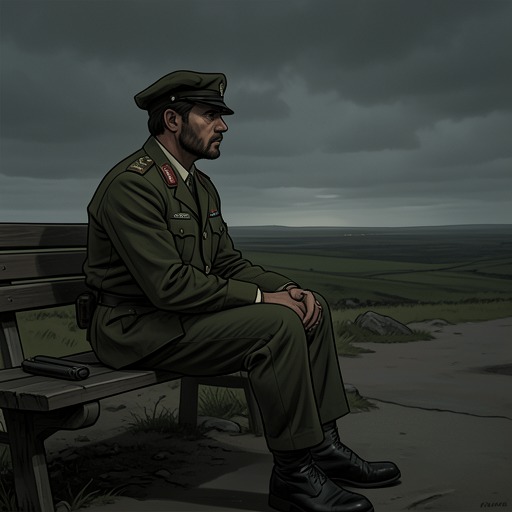
In a conversation about American soldiers, the Colonel names Grappa alongside Pasubio and the Basso Piave as fronts where his side had fought. The comparison makes the mountain a measure of the demands of earlier campaigns and of the courage expected of soldiers. His recollections give that military geography a personal scale: he thinks of the massif with Assalone, Pertica, and a hill whose name he cannot remember, and identifies this country as where he grew up.
That remembered terrain returns in troubled dreams. The Colonel recalls waking in a sweat with the fear that he would be unable to get the men out of the trucks. The memory does not present battle as a clean sequence of victories; it preserves the strain of responsibility and the possibility of failing those under his command. Monte Grappa is therefore both a landscape of military formation and a place where the costs of command remain active in memory.
Family Burial and Loss
The Colonel went to Monte Grappa to see where his brother was buried. His brother was killed there in 1918. A patriot influenced by hearing Gabriele d'Annunzio speak, he volunteered before his class was called. The Colonel says that the family never knew him very well because he went to war so quickly. The visit to the ossuary gives this brief family history a physical destination, but it cannot restore the intimacy that his early departure prevented.
Significance in the Colonel’s Past
Monte Grappa gathers several layers of the Colonel’s history into one place: the mountain country of his youth, a theater of war, the site of his brother’s grave, and a landscape revisited through memory. Its significance comes from this overlap rather than from any single episode. The mountain makes military geography personal: campaigns become the ground on which he grew up, commanded men, and remembers a brother whose life and death the family barely had time to know.